What Is Pediatric Chiropractic? A Guide for Parents
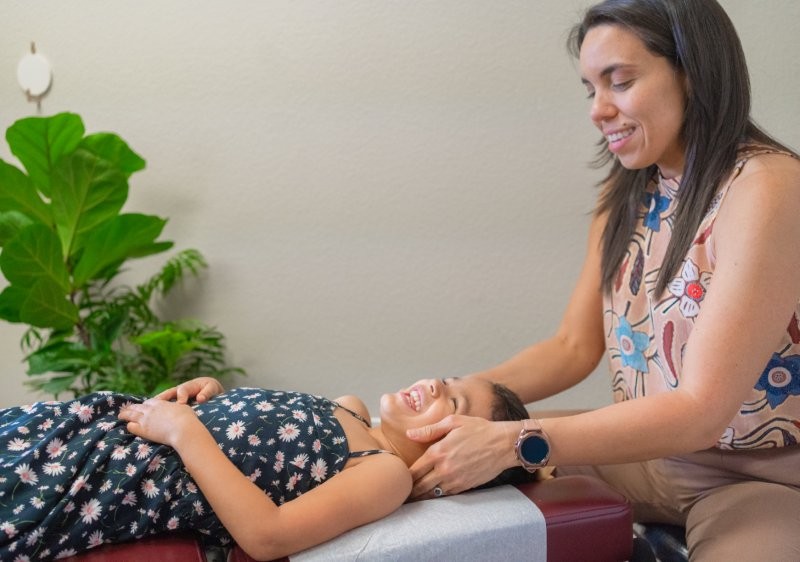
If you have never seen a child receive chiropractic care, you may be wondering what it actually looks like—and whether it is simply an adult adjustment performed on a smaller body.
It isn't.
Pediatric chiropractic care is adapted to a child's age, size, stage of development, comfort, and individual needs. At Mojica Chiropractic Care, our focus is on gentle, specific care and understanding how a child is moving and functioning as they grow.
What Does Pediatric Chiropractic Look At?
Children are constantly changing.
They are learning to hold their head up, roll, sit, crawl, walk, run, climb, balance, play sports, and navigate increasingly complex movement.
During a pediatric evaluation, we may look at things such as:
- spinal and joint mobility
- posture and movement
- muscle tension and compensation patterns
- developmental and birth history
- body awareness and coordination
- the concerns parents are noticing at home
We are not looking at one symptom in isolation.
The goal is to understand the child as a whole and determine whether chiropractic care is appropriate for them.
Is Pediatric Chiropractic Different From Adult Care?
Yes.
A child's anatomy, movement patterns, and developmental stage are different from an adult's, so the technique must be adapted accordingly.
With infants and young children, adjustments are typically very gentle and specific. Care may happen while a baby rests comfortably, sits with a parent, or while an older child plays or changes position.
As children grow, technique can change with them.
Most importantly, we respect the child's comfort level. We do not believe pediatric care should feel forced.
Why Do Families Bring Children to a Chiropractor?
Families come to our office for many different reasons.
Some parents have noticed tension, limited movement, a persistent head preference, posture or mobility concerns, or changes related to growth and sports.
Others simply want chiropractic to be part of their child's wellness routine.
Our role is not to diagnose or treat pediatric medical conditions.
Instead, pediatric chiropractic care focuses on joint mobility, movement, neuromusculoskeletal function, and the sensory information associated with movement.
That fits naturally into the broader way we think about childhood development: the body and nervous system are continually exchanging information as children move, explore, and adapt.
Is Pediatric Chiropractic Safe?
Parents should be able to ask this question openly.
Research on pediatric spinal manipulation and manual therapy is still limited. Available reviews report that most documented adverse events are mild and temporary, such as soreness or increased crying. Serious adverse events have also been reported, although the available research does not allow us to determine their true incidence reliably.
That is why good pediatric chiropractic care starts with appropriate history, examination, age-appropriate technique, and knowing when another healthcare provider should be involved.
If something in a child's history or examination suggests medical evaluation is needed first, referral is the appropriate next step.
What Happens at Your Child's First Visits?
At Mojica Chiropractic Care, the new-member process is intentionally divided into two visits.
Day 1 — Listen + Assess
We begin with your child's history and the concerns that brought you in.
The evaluation may include movement, spinal mobility, posture, developmental findings, and other age-appropriate examination procedures.
We also use CLA INSiGHT™ technology when clinically appropriate to gather non-invasive functional measurements that complement the physical examination.
These scans do not diagnose disease. They provide additional objective information that Dr. Liz considers together with the child's history, movement, examination findings, and goals.
Day 2 — Understand + Plan + Begin
Dr. Liz reviews the findings with you, explains what she sees, and discusses whether chiropractic care is appropriate.
If care is recommended, you will also review the proposed plan and financial options.
When clinically appropriate and you are comfortable moving forward, your child's first adjustment is provided at this visit.
The goal is for parents to understand what we evaluated, what we found, and why a recommendation is being made.
Why Pediatric Training Matters
Dr. Liz holds CACCP certification through the International Chiropractic Pediatric Association, which requires additional postgraduate education focused on chiropractic care for children and pregnant patients.
That training complements her clinical experience working with infants, children, teens, pregnant mothers, and families.
Where Pediatric Chiropractic Fits
Pediatric chiropractic is one piece of a larger picture.
At Mojica Chiropractic Care, we focus on supporting healthy joint mobility, movement, body awareness, neuromusculoskeletal function, and nervous-system health.
A child may also benefit from support from their pediatrician, occupational or physical therapist, speech-language pathologist, lactation consultant, developmental specialist, or another healthcare professional depending on their individual needs.
Good care is not about making one profession responsible for everything.
It is about understanding where chiropractic fits—and when another type of support may be appropriate.
Want to Learn More?
Explore more about pediatric care, what to expect at your child's first visits, and how neurodevelopment fits into the bigger picture.
Mojica Chiropractic Care provides gentle pediatric chiropractic care for families in Winter Springs, Oviedo, and surrounding Central Florida communities.