
Torticollis & Head Preference in Babies
Sometimes the first sign is subtle.
You may notice your baby always sleeps with their head turned the same way, prefers looking toward one side, feeds more comfortably in one direction, or seems unhappy when you gently encourage them to turn the other way.
Other babies may develop a noticeable head tilt or seem tighter through one side of their neck and body.
You know your baby best. When you keep noticing the same movement pattern, it is worth paying attention.
Head preference can happen for different reasons, and not every baby who favors one side has torticollis. A thoughtful evaluation can help identify whether limited movement, muscle tightness, positioning, or other factors may be contributing to the pattern you are seeing.
Noticing a Head Preference? Let's Take a Closer LookDoes This Look Familiar?
Parents may notice that their baby:
- Consistently looks toward the same side
- Sleeps with their head turned in one direction
- Tilts their head toward one shoulder
- Resists or has difficulty turning the other way
- Seems more comfortable feeding on one side
- Becomes frustrated when positioned in a certain direction
- Appears tighter through one side of the neck or body
- Has difficulty maintaining a centered head position
- Uses one side of the body differently than the other
- Begins developing flattening on one side or the back of the head
Sometimes the concern begins with feeding, tummy time, or head shape—and the movement preference becomes more noticeable once parents know what to look for.
What's the Difference?
A head preference simply describes a pattern: your baby tends to look, rest, or move toward one side more often than the other.
Torticollis is a condition involving an abnormal head or neck position. Congenital muscular torticollis often involves tightness or shortening of a neck muscle, which can lead to a head tilt toward one side with rotation toward the opposite side.
A baby can show a preference before a formal diagnosis has been made, and not every asymmetrical movement pattern is caused by torticollis.
That is why persistent head tilt, restricted neck movement, or significant asymmetry should be discussed with your baby's pediatrician.
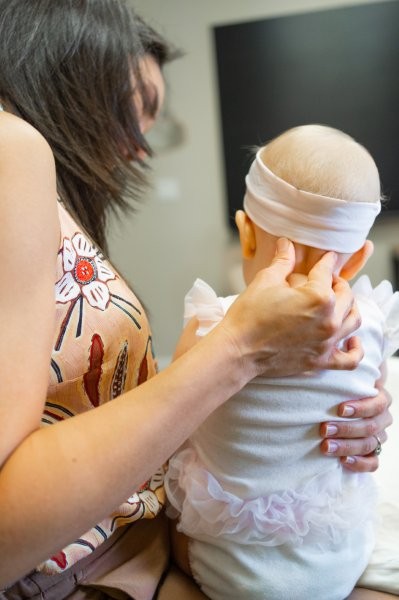
There Can Be More Than One Reason
A baby's early movement patterns can be influenced by many factors. These may include:
- Positioning before birth
- Prematurity
- Birth experience
- Limited opportunities to move in different positions
- Neck muscle tightness
- Congenital muscular torticollis
- Positional preferences developed during the newborn period
- Other musculoskeletal, visual, neurological, or medical factors
Our goal is never to assume that one finding explains everything.
Instead, we look at the pattern as part of your baby's overall history and development and encourage appropriate medical or therapeutic evaluation when needed.
Movement Preference Creates Repeated Sensory-Motor Experience
When a baby repeatedly turns or rests toward one side, they experience the environment differently from that position. Over time, a persistent preference may influence:
- • Weight-bearing
- • Visual orientation
- • Feeding positions
- • Head shape
- • Early movement experiences
- • How the two sides of the body are used
Recognizing asymmetry early gives families an opportunity to better understand what is happening and seek appropriate support.
Looking at the Whole Baby
At Mojica Chiropractic Care, we do not diagnose or treat torticollis.
When parents bring in a baby with a head preference or asymmetrical movement pattern, Dr. Liz evaluates how the baby moves as a whole. Depending on your baby's age, history, and presentation, the assessment may include:
- Head and neck movement
- Ability to turn comfortably in both directions
- Head tilt or positional preference
- Neck and spinal mobility
- Body symmetry & tension patterns
- Tolerance for different positions & tummy time
- Feeding-position preferences
- Birth and pregnancy history
- Nervous system function and regulation
If the findings suggest that additional medical, physical therapy, feeding, or developmental evaluation is appropriate, we encourage families to involve those providers.
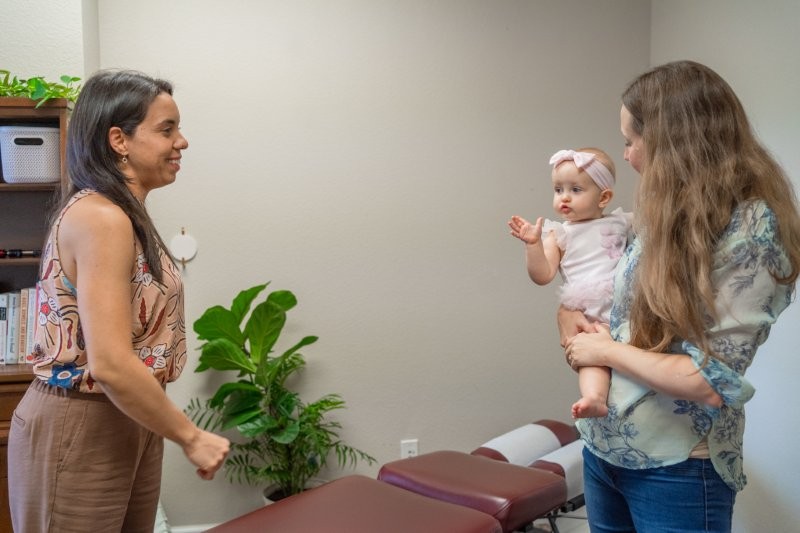
Gentle Support for Movement and Comfort
One of the first things we can evaluate is whether the child has the physical mobility needed to comfortably experience movement.
Infant chiropractic care at Mojica Chiropractic Care is gentle, specific, and adapted to each baby's age, size, comfort, and stage of development. When restricted spinal movement, physical tension, or asymmetrical movement patterns are identified, care may focus on supporting:
- • Comfortable movement
- • Spinal mobility
- • Body awareness
- • Symmetry of movement
- • Nervous system regulation
- • Ability to explore different positions
Start by giving the body the opportunity to move well, then observe how the child uses that movement.
Instead of "correcting torticollis," chiropractic care may serve as one supportive part of a broader plan focused on helping your baby move and function comfortably.
Supporting Your Baby as a Team
Babies with persistent head tilt, restricted movement, or diagnosed congenital muscular torticollis may benefit from evaluation and care from other professionals.
When torticollis is diagnosed or movement restriction is significant, additional developmental or rehabilitative support may also be appropriate. Dr. Liz values collaborative care and wants every child to receive the support that best fits their individual needs.
Encourage Movement Through Everyday Moments
If your pediatrician or therapist has not given you specific restrictions, simple daily routines can provide babies with opportunities to experience different positions. This may include:
- Supervised tummy time while your baby is awake
- Alternating sides when holding your baby
- Alternating feeding positions when appropriate
- Encouraging your baby to look toward interesting faces, toys, or sounds from different directions
- Reducing unnecessary awake time spent in car seats, swings, and other containers
Always place your baby on their back for sleep on a safe, flat sleep surface.
Do not use positioning pillows or devices to change your baby's head position during sleep unless specifically directed by an appropriate medical provider.
If your baby has diagnosed torticollis, follow the individualized positioning, stretching, or exercise recommendations provided by their pediatrician or pediatric physical therapist.
Persistent Asymmetry Deserves a Closer Look
Talk with your baby's pediatrician if you notice:
- Persistent head tilt
- Difficulty or inability to turn the head in one direction
- Significant neck stiffness
- A movement preference that is becoming more noticeable
- Changes in head shape or increasing flattening
- Facial asymmetry
- Concerns about motor development
- A new head tilt that was not previously present
- Any other change in your baby's movement, behavior, or health that concerns you
Head tilt can have causes beyond muscle tightness, so appropriate pediatric evaluation is important.
You May Also Be Noticing
Plagiocephaly & Head Shape Concerns
Is one side of your baby's head beginning to look flatter than the other? Learn how positioning and movement can influence head shape during infancy.
Latching Difficulties
Does your baby feed more comfortably from one side or have difficulty finding a comfortable feeding position?
Birth Stress & Difficult Deliveries
Your baby's pregnancy and birth history can provide useful context when evaluating early tension and movement patterns.
Crawling & Movement Concerns
As your baby grows, learn what parents may notice when movement begins to develop asymmetrically.
Gentle Care for Developing Bodies
A baby's body is changing rapidly during the first year of life. Dr. Liz is certified in chiropractic pediatrics and uses gentle, age-appropriate techniques while considering each baby's movement, development, comfort, and individual needs.
Explore Pediatric Chiropractic CareLearn More

Why Does My Baby Always Look to One Side?
A parent-friendly guide to head preference, movement, positioning, and when persistent asymmetry deserves evaluation.
Read More
Head Preference vs. Torticollis: What Parents Should Know
Explain the difference between noticing a positional preference and receiving a diagnosis of torticollis.
Read More
Torticollis and Flat Head: Why Are They Often Seen Together?
Explain how persistent positioning and limited neck movement can influence where pressure is placed on a baby's developing skull.
Read MoreNoticing a Head Preference? Let's Take a Closer Look
Sometimes a parent simply notices that their baby moves differently from one side to the other. You do not need to know whether it is torticollis—or have a diagnosis—before asking questions.
We are here to listen to what you are seeing, carefully evaluate your baby's movement and physical patterns, and help you understand whether chiropractic care or another form of support may be appropriate.