
CLA INSiGHT™Nervous System Scans
Thoughtful care starts with understanding the person in front of us. Along with your health history, conversation, and physical examination, Dr. Liz uses CLA INSiGHT™ technology to gather objective functional information about several aspects of how your body is responding at the time of the assessment.
WHAT INSiGHT™ SCANS ARE — AND AREN'T
INSiGHT™ scans provide objective, non-invasive functional measurements that can be compared with the rest of your chiropractic examination and, when appropriate, tracked over time.
They are not used to diagnose diseases or medical conditions. A scan result is not interpreted by itself.
Dr. Liz considers the scan findings together with your health history, physical examination, movement and mobility assessment, clinical findings, and individual goals.
Painless, Radiation-Free Functional Assessment
The scanning process does not use radiation and does not involve needles or electrical stimulation. The sensors gather information from the body without delivering treatment.
The technology can be adapted for patients across different ages and stages of life when appropriate, including infants, children, expectant mothers, and adults.


Understanding the Three Scans
Each technology evaluates a distinct aspect of functional physiology.
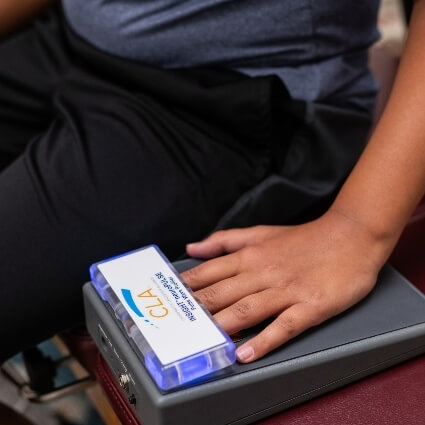
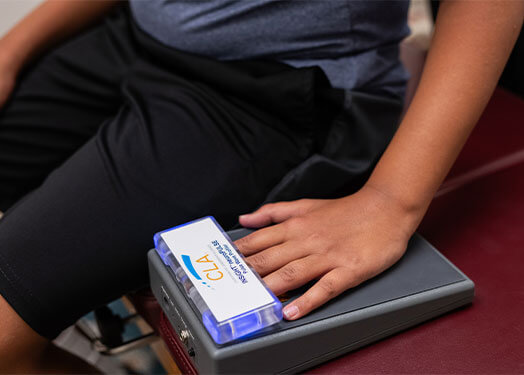
neuroPULSE
Heart Rate Variability — HRV
WHAT IT MEASURES
Heart Rate Variability, or HRV, measures the small differences in time between successive heartbeats. These beat-to-beat variations are influenced by autonomic regulation of the heart and can provide useful information about how the cardiovascular system is responding under the conditions in which the measurement is taken.
WHY WE INCLUDE IT
Dr. Liz uses HRV as one piece of objective information related to autonomic regulation and adaptability. Rather than interpreting one number as “good” or “bad,” the result is considered in context with the rest of your evaluation and, when appropriate, may be compared with future measurements collected under similar conditions.
WHAT YOU EXPERIENCE
You will sit quietly while the neuroPULSE sensors collect your pulse data for several minutes. There is no electrical stimulation. You simply relax while the system records the measurement.
neuroCORE
Surface Electromyography — sEMG
WHAT IT MEASURES
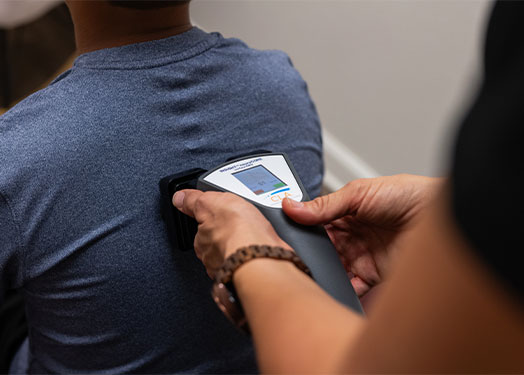
Surface electromyography, or sEMG, measures electrical activity produced by muscles. During the neuroCORE scan, sensors collect information from muscles along the spine to show patterns of muscle activity and differences between regions or sides.
WHY WE INCLUDE IT
Muscle activity is one part of understanding how the body is holding itself and responding during an assessment. Dr. Liz may consider the scan alongside posture, movement, mobility, physical demands, symptoms, and other examination findings. When scans are repeated, changes in these patterns can also provide another objective point of comparison.
WHAT YOU EXPERIENCE
Small sensors are placed against the skin along the back or neck while measurements are collected. The sensors read the electrical activity naturally produced by your muscles. They do not send electricity into your body.
neuroTHERMAL
Spinal Skin-Temperature Assessment
WHAT IT MEASURES
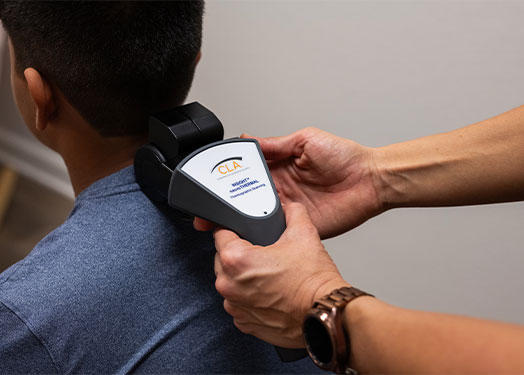
The neuroTHERMAL scan uses infrared sensing technology to measure skin-temperature patterns along the spine. The scan allows Dr. Liz to compare temperature patterns and asymmetries between regions.
WHY WE INCLUDE IT
Skin temperature is influenced by several physiological factors, including blood flow and autonomic regulation. Thermal measurements provide another non-invasive data point that Dr. Liz can consider alongside the rest of the examination. The value of the scan is in identifying and comparing patterns—not diagnosing what caused a temperature difference.
WHAT YOU EXPERIENCE
A small infrared sensor is gently moved along the spine to collect skin-temperature readings. The device simply measures heat naturally emitted from the surface of the skin. The scan is non-invasive and does not deliver radiation or electrical stimulation.
Why Use More Than One Measurement?
Each INSiGHT™ technology measures something different. None of these measurements tells the entire story by itself.
Heart-Rate Variability
Reflects beat-to-beat variations in heart rhythm related to cardiovascular autonomic regulation.
Muscle Electrical Activity
Reflects electrical activity in postural muscles supporting the spine.
Skin-Temperature Patterns
Reflects temperature patterns and thermal symmetry along the spine.
More Than “How Do You Feel Today?”
How you feel matters—but it is only one part of the conversation. Dr. Liz values combining what you tell us with information that can be observed or measured.
Why Might We Scan Again?
Some measurements are most useful when they can be compared over time. When clinically appropriate, Dr. Liz may repeat INSiGHT™ scans to compare current findings with an earlier assessment.
A re-scan does not determine progress by itself. Dr. Liz considers changes in scan data together with how you are feeling, how you are moving, functional changes, examination findings, and your goals.
Comparative Feedback
Re-scans provide another objective point of comparison to review alongside your clinical progress and goals.
Simple. Non-Invasive. Easy to Complete.
Here is what happens during your scanning experience.
PREPARE
Our team will explain the scan and help position you comfortably.
SCAN
The appropriate measurements are collected using the INSiGHT™ sensors.
REVIEW
Dr. Liz reviews the information together with the rest of your assessment.
DISCUSS
Relevant findings are explained during your Report of Findings.
Frequently Asked Questions
Care Starts With Understanding
Your story, your goals, your examination, and objective information all help us understand where you are starting. INSiGHT™ technology gives us another way to gather information, track meaningful patterns when appropriate, and make the conversation about your care clearer.