
When the World Feels Like a Lot, What Is the Body Telling the Brain?
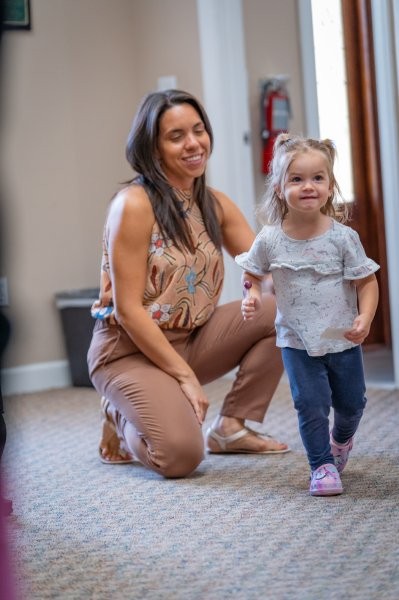
When parents of an autistic child think about sensory input, they often think about what is happening around their child.
Noise. Lights. Crowded rooms. Clothing. Transitions. New environments.
But the nervous system is also receiving a constant stream of information from somewhere else:
the body itself.
Every time your child climbs, jumps, sits, reaches, pushes, pulls, changes position, or moves a joint, sensory information is being sent toward the brain.
And that information matters.
The Sense We Don't Always Think About
One part of this internal sensory system is called proprioception.
Proprioception helps the nervous system understand where the body is in space, how it is moving, and how much force is being used.
It contributes to things we often take for granted:
- knowing where our arms and legs are without looking
- coordinating movement
- adjusting posture
- judging how much force to use
- moving through the environment efficiently
That may help explain why some children seem to constantly seek movement, pressure, jumping, climbing, or crashing — while others may approach movement very differently.
Those behaviors can have many explanations, and they are not something we diagnose from a checklist.
But they can give us clues about how a child is experiencing and using their body.
What Does This Have to Do With Chiropractic?
Quite a bit.
Joints, muscles, and surrounding tissues contain sensory receptors that continuously provide information to the nervous system.
Healthy movement creates input.
The nervous system receives that input, processes it, and uses it as part of the ongoing conversation involved in movement, body awareness, posture, and adaptation.
That is one reason pediatric chiropractic at Mojica Chiropractic Care goes beyond asking whether a child has pain.
We also look at:
How is the body moving?
Where might movement be restricted?
Where may the child be compensating?
And what can their movement patterns and objective findings tell us about how their body is functioning?
Where Pediatric Chiropractic Fits
A chiropractic adjustment provides a controlled mechanical input to the joints and surrounding tissues while supporting healthy joint mobility.
That movement also creates sensory and proprioceptive information for the nervous system to process.
For a child whose nervous system may already be working hard to interpret and respond to the world around them, the quality of information coming from their own body deserves attention too.
Pediatric chiropractic supports that physical foundation through movement, joint function, proprioceptive input, and the brain-body communication involved in everyday adaptation.
And sometimes, understanding that connection changes the way parents think about their child's care entirely.
Want to Understand the Bigger Picture?
We created a new parent resource that goes deeper into autism, movement, nervous-system regulation, proprioception, INSiGHT™ scans, and how pediatric chiropractic fits into the developmental picture.
You can explore the full Autism & Neurodevelopmental Support page.
Want to Understand the Bigger Picture?
We created a new parent resource that goes deeper into autism, movement, nervous-system regulation, proprioception, INSiGHT™ scans, and how pediatric chiropractic fits into the developmental picture.
Mojica Chiropractic Care provides gentle pediatric chiropractic care for families in Winter Springs, Oviedo, and surrounding Central Florida communities.